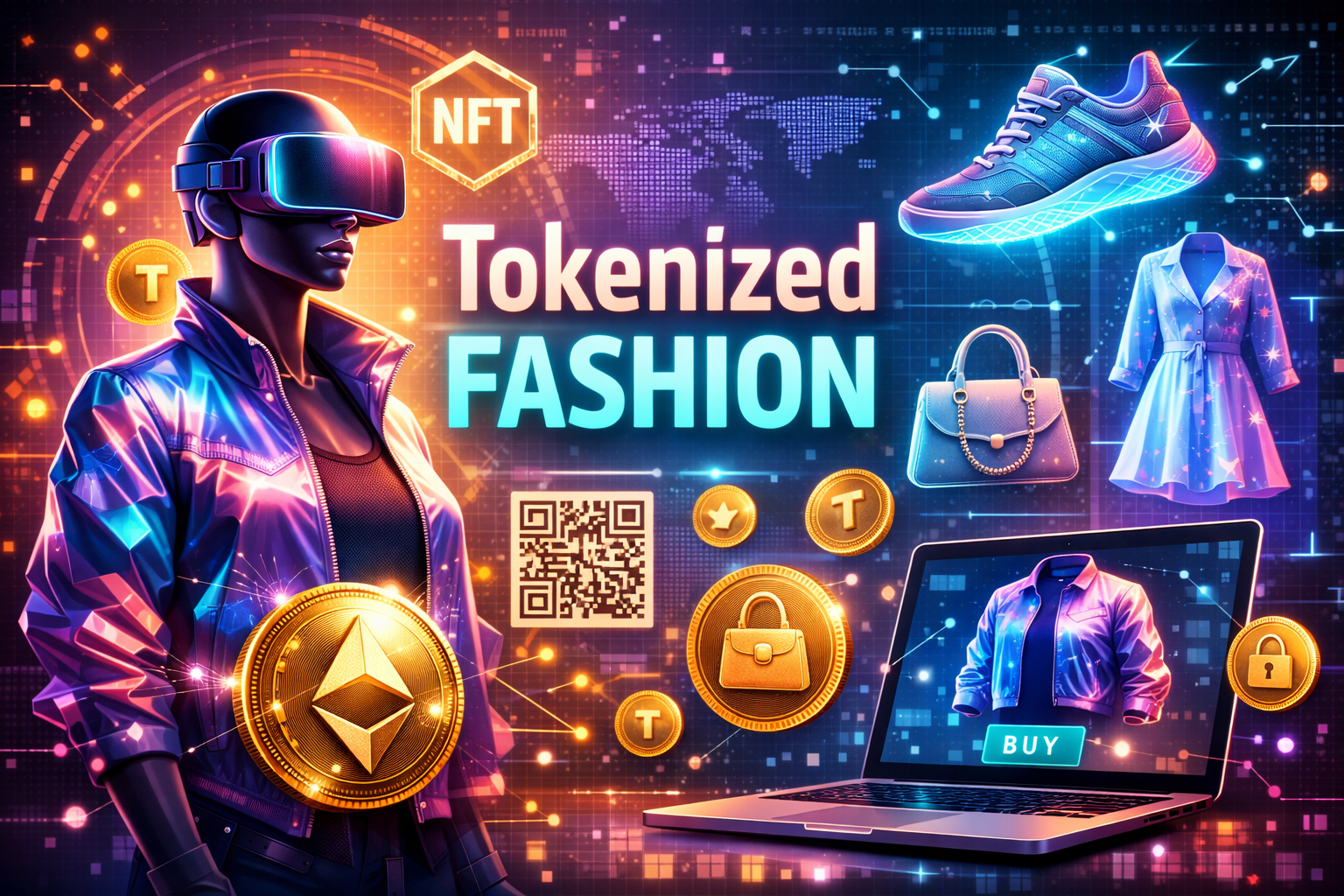
The global fashion and luxury industry is built on exclusivity, craftsmanship, and brand trust. Yet behind the scenes, it faces persistent challenges—counterfeiting, opaque supply chains, fragmented resale markets, and limited transparency around ownership. As digital commerce evolves, these issues are becoming harder to ignore.
This is where tokenized fashion emerges as a transformative solution. By combining blockchain technology with retail and luxury ecosystems, tokenization introduces a new way to authenticate, own, trade, and experience fashion assets. At the intersection of blockchain, retail, and luxury, tokenized fashion is redefining how value is created and preserved in the industry.
Tokenized fashion refers to the process of representing physical or digital fashion items—such as apparel, handbags, watches, or accessories—as blockchain-based tokens. Each token acts as a verifiable digital record linked to a specific item, capturing information such as authenticity, ownership history, and provenance.
Unlike traditional digital certificates or centralized databases, tokenized fashion assets are recorded on a blockchain, making them:
This approach goes beyond simple digital collectibles. Tokenized fashion connects real-world luxury goods with programmable digital ownership, enabling new use cases across retail, resale, and customer engagement.
The luxury fashion market loses billions annually to counterfeit goods and gray-market reselling. At the same time, modern consumers increasingly demand transparency, sustainability, and proof of authenticity.
Key pain points tokenization addresses include:
Tokenized fashion provides a secure, standardized foundation to solve these issues at scale.
Blockchain is the underlying infrastructure that enables tokenized fashion. Its core properties make it uniquely suited for luxury retail applications.
Every tokenized luxury item can include a permanent record of origin, manufacturing details, and ownership transfers. Once recorded, this data cannot be altered, providing strong protection against fraud.
Smart contracts automate ownership transfers when items are sold or resold. Brands can embed rules such as:
This gives designers and brands more control over secondary markets.
Each fashion item gains a unique blockchain-based identity, functioning as a digital twin that persists throughout the product’s lifecycle.
One of the most powerful outcomes of tokenized fashion is the rise of phygital fashion—where physical products are paired with digital experiences.
Examples include:
Phygital fashion enables brands to extend luxury beyond the point of sale, creating ongoing engagement and community-driven value.
Blockchain tokens act as verifiable certificates of authenticity, replacing paper-based or centralized systems.
Tokenized ownership simplifies resale by allowing buyers to instantly verify provenance and ownership history, increasing trust and liquidity.
Rare fashion pieces or collectibles can be fractionally owned, lowering entry barriers while maintaining exclusivity.
Brands can issue token-based rewards, exclusive access, or privileges tied to ownership rather than accounts.
Tokenization supports scarcity-driven product launches with transparent supply and provable rarity.
While tokenized fashion offers clear advantages, adoption comes with challenges:
Overcoming these challenges will require collaboration between fashion brands, technology providers, and regulators.
As blockchain infrastructure matures, tokenized fashion is expected to move from experimentation to mainstream adoption. The convergence of tokenization with technologies such as AI, immersive commerce, and digital identity systems will further accelerate this shift.
In the long term, tokenized fashion could redefine:
The intersection of blockchain, retail, and luxury is not a passing trend—it represents a structural evolution of the fashion industry.
Tokenized fashion sits at the crossroads of blockchain innovation, modern retail, and luxury brand strategy. By enabling verified authenticity, transparent ownership, and seamless physical-digital experiences, tokenization addresses long-standing industry challenges while unlocking entirely new opportunities.
As brands and consumers increasingly embrace digital-first models, tokenized fashion is poised to become a foundational layer of the future luxury economy—where trust, technology, and timeless craftsmanship converge.