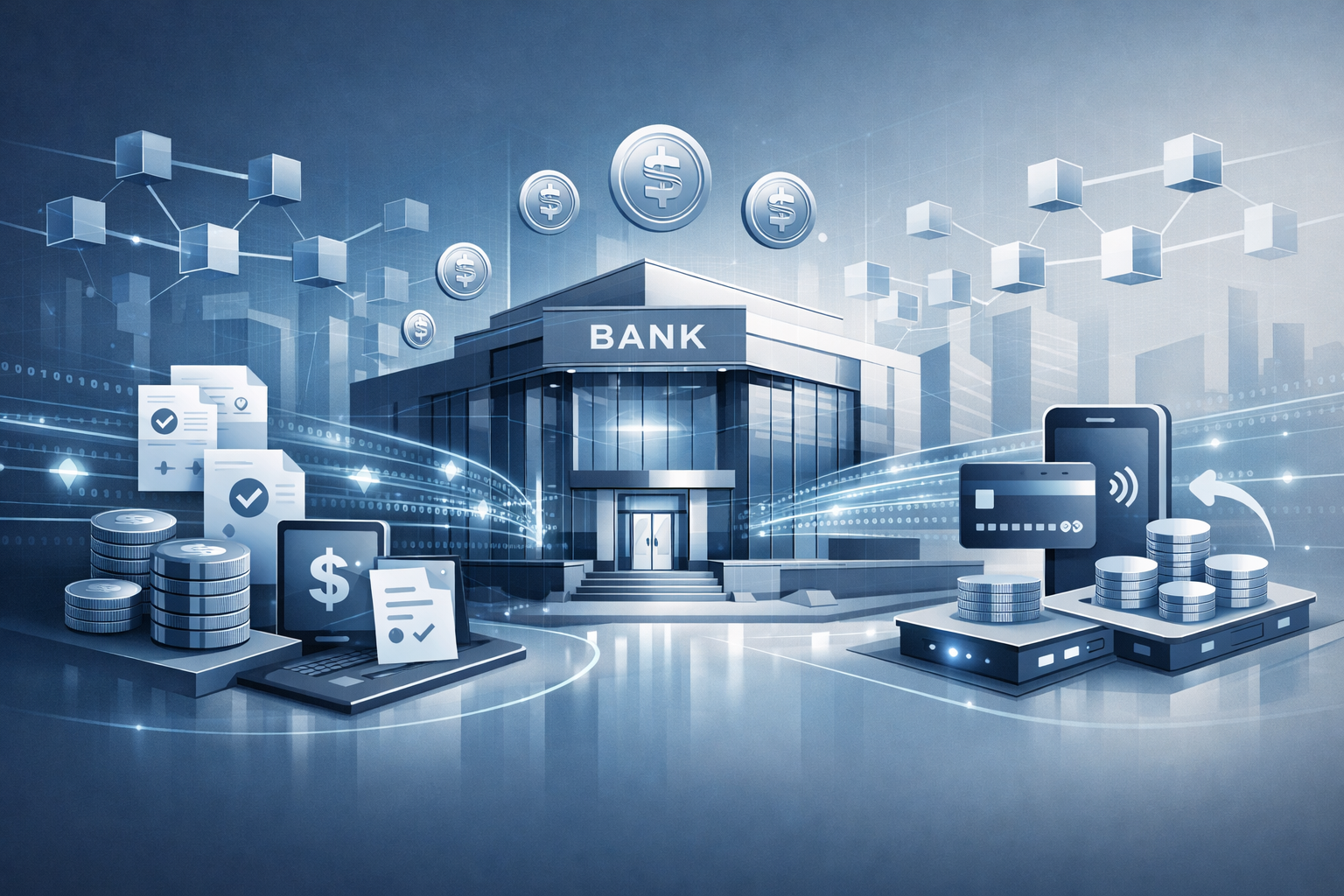
The global banking industry processes over $5 trillion in payments every single day, yet inefficiencies still cost financial institutions billions annually. According to McKinsey, banks lose nearly $127 billion each year due to payment fraud, manual reconciliation, and legacy infrastructure. At the same time, the global tokenization market is projected to exceed $6.8 billion by 2030, growing at a CAGR of over 16%.
This rapid growth explains why tokenization in banking has become a top strategic priority. Banks now use tokenization to secure sensitive data, improve liquidity, and modernize financial workflows. More importantly, tokenization enables faster invoice financing, seamless payments, and automated payouts—areas where traditional systems often fall short.
In this guide, we’ll break down how tokenization works in banking, why it matters, and how it’s transforming invoice financing, payments, and payouts in practical, measurable ways.
Tokenization in banking replaces sensitive financial data—such as account numbers or invoice values—with unique digital tokens. These tokens have no exploitable value outside the system, which significantly reduces fraud and data breaches.
Unlike encryption, tokenization:
As banks modernize, tokenization in banking acts as a bridge between legacy systems and digital-first financial services.
Banks face mounting pressure from fintechs, regulators, and customers. As a result, tokenization in banking delivers benefits that traditional systems can’t match.
Key drivers include:
Because of these advantages, tokenization in banking has shifted from innovation labs to core infrastructure.
Invoice financing helps businesses unlock working capital, yet the process remains slow and opaque. According to World Bank data, over $3 trillion in invoices remain unpaid globally, creating severe cash flow gaps for SMEs.
Traditional invoice financing suffers from:
These inefficiencies increase costs for banks and borrowers alike.
Tokenization in banking streamlines invoice financing by converting invoices into digital tokens. Each token represents a verified financial claim that can be tracked, financed, or transferred securely.
With tokenized invoices:
As a result, invoice financing cycles shrink from weeks to hours or even minutes. This improvement boosts liquidity while reducing operational risk.
Global digital payments are expected to surpass $14 trillion by 2027, yet fraud and delays remain persistent challenges. Tokenization in banking directly addresses these issues.
Traditional payment systems expose sensitive data at multiple touchpoints. Every exposure increases the risk of breaches, chargebacks, and compliance violations.
Tokenization in banking replaces card numbers and account details with tokens during transactions. These tokens travel through payment networks without exposing real data.
Benefits include:
According to Mastercard, tokenized payments improve approval rates by 2–3%, which translates into millions in additional revenue for banks and merchants.
Cross-border payments often take 2–5 business days and cost up to 6% per transaction, as reported by the World Bank. Tokenization in banking helps solve this inefficiency.
By tokenizing payment instructions and settlement assets:
Tokenization enables near-instant cross-border payments while maintaining compliance and transparency.
Payouts—such as salaries, vendor payments, and refunds—often rely on fragmented systems. Errors, delays, and reconciliation issues cost organizations time and money.
In fact, PwC estimates that nearly 30% of payout operations still involve manual intervention.
Tokenization in banking automates payouts by linking tokens to predefined rules. Smart contracts release funds instantly when conditions are met.
Key advantages include:
For gig economy platforms and global enterprises, tokenization ensures accurate and timely payouts across borders.
Compliance remains a top concern in banking. Tokenization in banking simplifies regulatory adherence by minimizing exposure to sensitive data.
Tokenization supports:
As regulators increasingly support digital transformation, tokenization aligns security with compliance rather than treating them as trade-offs.
While tokenization doesn’t always require blockchain, distributed ledger technology enhances its value. Blockchain provides immutability, transparency, and decentralization.
When combined with tokenization in banking:
This combination is particularly powerful for invoice financing and cross-border settlements.
Despite its advantages, tokenization in banking faces some hurdles:
However, as APIs mature and cloud adoption increases, these challenges continue to fade.
Looking ahead, tokenization in banking will expand beyond payments and financing. Emerging use cases include:
According to the BIS, over 90% of central banks are actively exploring digital currencies, many of which rely on tokenization principles.
Tokenization in banking replaces sensitive financial data with secure digital tokens to reduce risk and improve efficiency.
It accelerates verification, reduces fraud, and improves liquidity through real-time tracking.
Yes, tokenized payments significantly reduce fraud and improve authorization rates.
Absolutely. Cloud-based platforms make tokenization accessible to banks of all sizes.
Tokenization in banking is reshaping how financial institutions handle invoice financing, payments, and payouts. By improving security, speed, and transparency, tokenization solves long-standing challenges that traditional systems struggle to address.
As digital finance continues to evolve, banks that embrace tokenization today will gain a decisive edge tomorrow. Simply put, tokenization in banking isn’t the future—it’s already here.