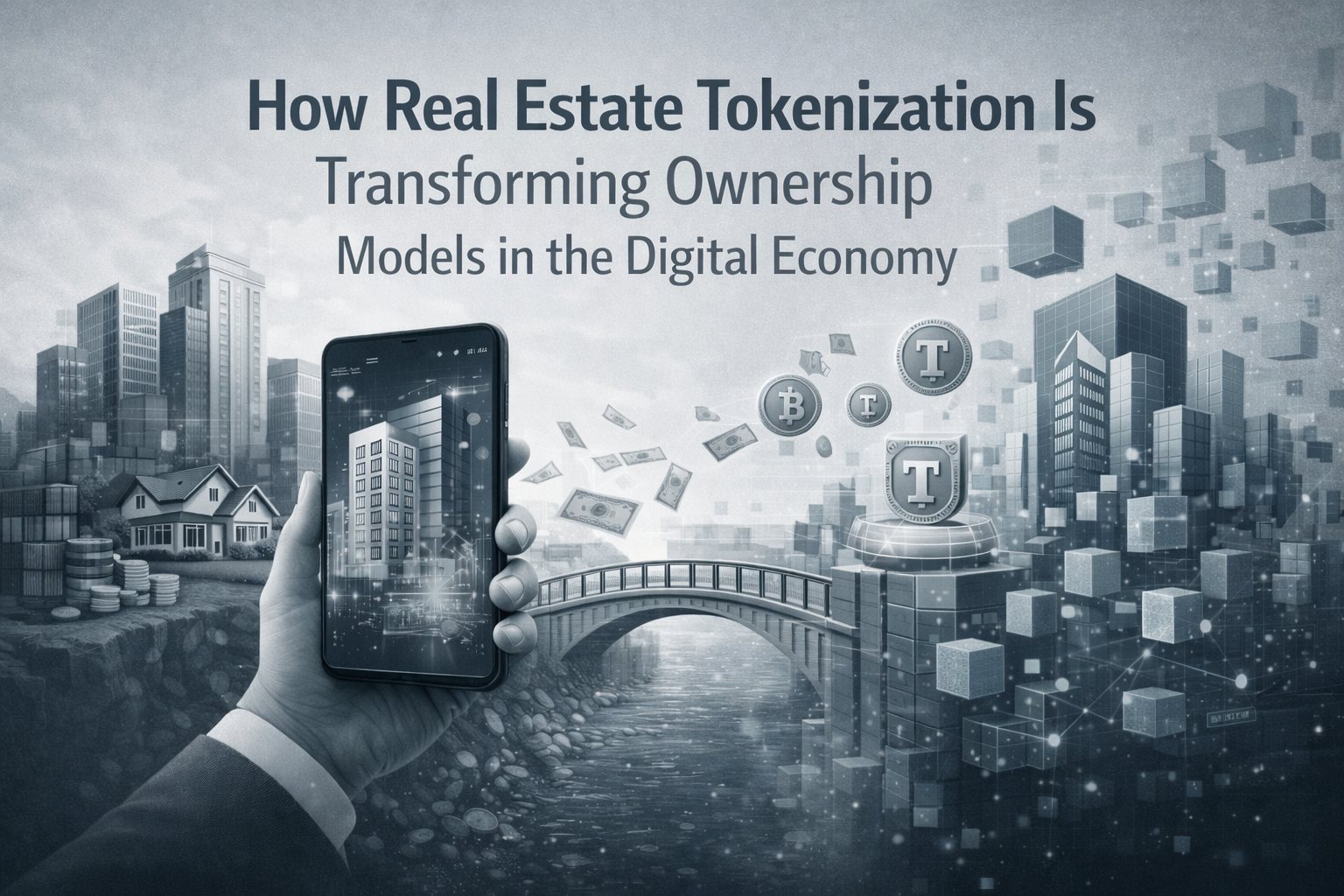
Owning real estate has always been seen as a smart move—but for many investors, the process feels anything but smart. High capital requirements, slow deal closures, lack of liquidity, and limited access to premium properties continue to frustrate individuals and businesses alike. In fact, property transactions often take 30 to 90 days to complete, while selling assets can take even longer. That delay alone makes real estate one of the least flexible investments in today’s fast-moving digital economy.
This is where real estate tokenization emerges as a powerful solution. By converting physical properties into digital tokens on blockchain networks, tokenization directly addresses these pain points. It lowers entry barriers, improves liquidity, enhances transparency, and enables global participation. With industry projections estimating that tokenized real-world assets could reach $15–16 trillion by 2030, real estate tokenization is rapidly becoming a cornerstone of modern property ownership.
Real estate tokenization is the process of dividing ownership of a property into digital tokens that exist on a blockchain. Each token represents a fractional share of the asset, allowing multiple investors to participate without owning the entire property.
This approach matters because it modernizes how real estate functions. Instead of relying on paperwork-heavy processes and intermediaries, blockchain-based systems create a faster, more transparent, and more efficient ownership model. As a result, real estate tokenization aligns property investment with the expectations of the digital economy.
One of the biggest problems in traditional real estate is affordability. Purchasing property often requires large upfront capital, making it inaccessible for many individuals. Even commercial real estate investments usually demand six-figure commitments.
Real estate tokenization solves this by enabling fractional ownership. Investors can buy smaller portions of a property, sometimes starting with a few hundred dollars. This shift opens the market to a broader audience and supports portfolio diversification without excessive risk.
As a result, real estate tokenization democratizes ownership in ways traditional models never could.
Real estate has long suffered from illiquidity. Selling a property can take months, and investors often have limited exit options. This lack of flexibility discourages participation, especially among younger, digitally native investors.
Tokenization improves liquidity by allowing property tokens to be traded more efficiently. While real estate remains a long-term asset, tokenized ownership models enable faster transfers and secondary trading opportunities. Market analysis suggests that tokenization can reduce transaction costs by up to 30%, making exits smoother and less expensive.
In a digital economy where speed matters, improved liquidity is a major advantage.
Traditional real estate transactions involve brokers, lawyers, banks, and multiple verification steps. This complexity leads to delays, higher fees, and human error.
Real estate tokenization simplifies this process through smart contracts. These self-executing contracts automate tasks such as ownership transfers, income distribution, and compliance checks. Once conditions are met, transactions complete automatically.
Automation significantly reduces processing time and administrative overhead. Studies indicate that blockchain-based systems can lower operational costs by 20–40%, benefiting investors and property managers alike.
Another challenge in real estate is limited transparency. Ownership records, pricing details, and transaction histories are often fragmented across systems, increasing the risk of disputes and fraud.
Blockchain technology brings clarity to this issue. Every transaction in real estate tokenization is recorded on an immutable ledger, creating a clear and verifiable ownership trail. Investors gain confidence because they can track asset performance and ownership changes in real time.
This transparency strengthens trust, which is essential for scaling digital ownership models.
Real estate markets have traditionally been local. Cross-border investing requires navigating currency exchange, legal frameworks, and regulatory restrictions. These hurdles discourage international participation.
Real estate tokenization removes many of these barriers by enabling global access to property investments. Investors can own fractional shares in properties located anywhere, without physically being present. Digital platforms streamline onboarding and compliance, making cross-border participation more efficient.
This global reach has contributed to an estimated 18% rise in cross-border digital property investments, signaling strong demand for borderless ownership models.
Real estate tokenization doesn’t just help investors—it also benefits developers and property owners. By issuing tokens, developers can raise capital faster and access a wider pool of investors without relying solely on traditional financing.
Key advantages include:
As a result, more projects can move forward, accelerating growth across the real estate ecosystem.
Regulation has been a concern, but progress is steady. Many jurisdictions are introducing clearer guidelines for digital assets and tokenized securities. This regulatory clarity boosts investor confidence and encourages institutional participation.
Industry forecasts suggest that improved regulations could unlock trillions of dollars in tokenized real estate value over the next decade. As legal frameworks mature, real estate tokenization is expected to gain mainstream acceptance.
Despite its advantages, real estate tokenization is not without challenges. Market volatility, cybersecurity risks, and varying legal standards can impact adoption.
However, ongoing innovation and education efforts are steadily addressing these concerns, paving the way for sustainable growth.
Looking ahead, real estate tokenization is poised to integrate more deeply with digital finance ecosystems. Tokenized properties may soon be used as collateral, traded seamlessly, or combined with other digital assets.
By 2030, experts expect:
These developments will further solidify tokenization as a core pillar of the digital economy.
How does real estate tokenization solve liquidity issues?
It allows fractional ownership and easier transfers, making property investments more flexible.
Can beginners invest through real estate tokenization?
Yes, lower entry costs make it accessible to new and small-scale investors.
Is real estate tokenization replacing traditional ownership?
Not entirely, but it is creating a powerful alternative ownership model.
Will real estate tokenization continue to grow?
Strong adoption trends and digital transformation indicate long-term growth.
Real estate tokenization is solving the industry’s biggest pain points—high costs, illiquidity, slow transactions, and limited access. By leveraging blockchain technology, it is transforming ownership models to match the speed and flexibility of the digital economy.
As adoption accelerates and regulations evolve, real estate tokenization is set to redefine how property is owned, traded, and valued—making real estate smarter, faster, and more inclusive than ever before.