For decades, investing in commodities meant dealing with middlemen, high fees, and complicated contracts. It wasn’t exactly beginner-friendly. Today, however, a digital shift is reshaping the landscape. Commodities Tokenization is transforming how investors access gold, oil, and other real-world assets—making the process faster, more transparent, and far more accessible than ever before.
But what exactly makes this innovation so powerful?
Modern investors want transparency, liquidity, and lower barriers to entry. They want control over their portfolios without complex paperwork or high fees. And that’s exactly where tokenized commodities shine.
In this comprehensive guide, we’ll explore the 11 proven advantages of Commodities Tokenization and why it may shape the future of global investing.
Commodities Tokenization refers to the process of converting physical commodities—like gold, silver, oil, or agricultural products—into digital tokens on a blockchain network.
Each token represents ownership of a real-world asset. For example:
These tokens are traded digitally, just like cryptocurrencies, but they are backed by tangible assets.
In simple terms, it bridges traditional commodities with blockchain technology.
Understanding how Commodities Tokenization works helps investors appreciate its benefits.
Here’s the process in straightforward steps:
A real-world commodity is verified, stored securely, and insured.
Digital tokens are created on a blockchain. Each token represents fractional ownership of the asset.
Smart contracts automate ownership transfers, transactions, and compliance.
Investors buy, sell, or trade tokens on digital exchanges.
Some platforms allow investors to redeem tokens for physical delivery.
This system removes many middlemen and creates a more streamlined investment process.
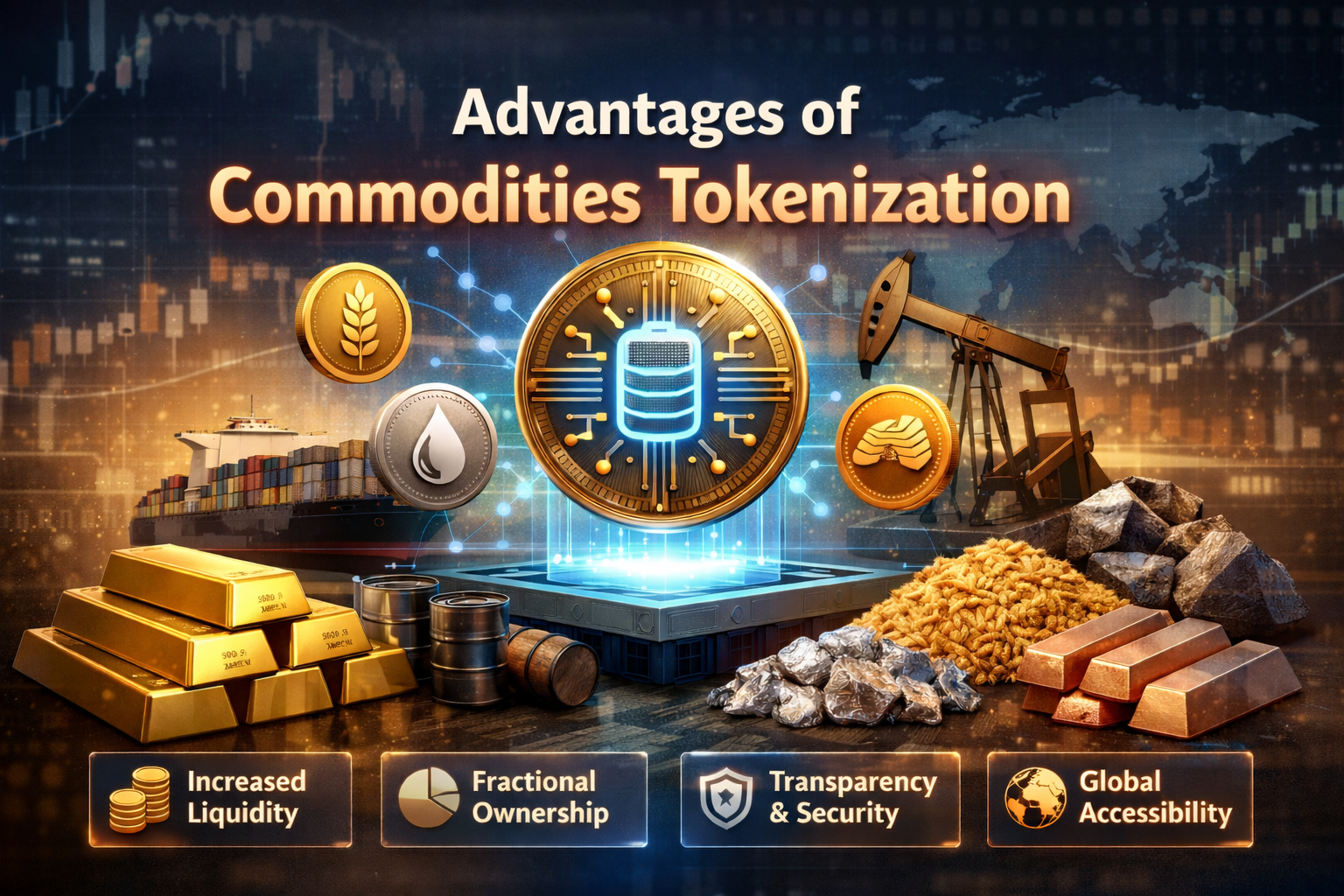
Below is a quick overview of the key benefits modern investors are embracing:
Now, let’s explore each one in detail.
Commodity markets—especially physical assets—can be slow and difficult to trade.
Tokenization changes the game.
By converting commodities into digital assets, investors can:
Liquidity improves because tokens can be traded on multiple exchanges worldwide.
Traditionally, investing in commodities required significant capital. Buying physical gold bars or oil contracts isn’t cheap.
With tokenization:
This creates financial inclusivity.
Thanks to blockchain networks, tokenized commodities can be accessed from anywhere with an internet connection.
There are no geographical limitations like traditional exchanges.
For example:
It’s borderless finance in action.
Traditional commodity trading involves brokers, banks, custodians, and clearinghouses.
Each layer adds cost.
Blockchain systems:
According to the World Economic Forum, blockchain can significantly reduce operational costs in financial systems.
Lower fees mean higher potential returns.
Blockchain transactions are recorded on a public ledger.
This means:
Investors can verify transactions without relying solely on trust.
Transparency builds confidence—and confidence drives adoption.
Traditional commodity trades may take days to settle.
Tokenized assets settle almost instantly.
No waiting for bank approvals.
No long clearing processes.
This efficiency improves capital flow and allows investors to react quickly to market changes.
Diversification reduces risk. That’s investing 101.
Tokenized commodities allow investors to:
By combining digital assets with real-world commodities, investors gain broader exposure.
Unlike traditional markets, blockchain networks operate 24/7.
Investors can trade:
This flexibility is especially useful in volatile markets.
Blockchain uses cryptographic security mechanisms.
This ensures:
While no system is perfect, blockchain significantly reduces counterparty risk.
Smart contracts automatically execute transactions when conditions are met.
This:
Automation simplifies complex financial processes.
Perhaps the biggest advantage is access.
Tokenization allows:
It levels the playing field.
The difference is clear.
It depends on the platform. Reputable providers use audited storage and blockchain security systems.
Some platforms allow physical redemption, especially for precious metals.
Regulation varies by country. Investors should check local compliance rules.
Gold, silver, oil, natural gas, and agricultural products are commonly tokenized.
You need a digital wallet and access to a compliant tokenization platform.
Yes, especially because of fractional ownership and low entry barriers.
The global financial system is evolving rapidly.
As decentralized finance grows and institutional adoption increases, tokenized real-world assets may become mainstream. Financial analysts predict strong growth in real-world asset tokenization markets over the next decade.
Modern investors who understand this shift may gain a competitive advantage.
The rise of Commodities Tokenization marks a major turning point in modern finance. From increased liquidity and transparency to global accessibility and fractional ownership, the advantages are clear and compelling.
This innovation isn’t just a trend—it’s a structural transformation of how we invest in real-world assets.
For modern investors seeking diversification, efficiency, and opportunity, tokenized commodities offer a promising path forward.
The future of investing may not just be digital—it may be tokenized.