Secured lending depends on one assumption: the collateral on paper is the collateral that exists, and the lender has first claim on it. For many NBFCs that assumption rests on records spread across loan systems, spreadsheets, registry portals, custodians and branch files. Ownership checks are manual. Valuations arrive late. The same asset can be offered to more than one lender, and a lender may only find out after a default.
A blockchain collateral management platform is one way to address these gaps. It gives authorized participants a shared, permissioned record of collateral identity, claims and lifecycle events. It is not a substitute for underwriting, legal due diligence or statutory registration, and it does not remove fraud or default risk on its own. Used well, it improves what an NBFC can see, verify and audit.
This guide explains how tokenized collateral works in NBFC lending, where it helps and where it does not, what an architecture looks like, and how to evaluate a platform and run a pilot.
Tokenized collateral is a digital token or blockchain record that represents an asset, an ownership interest, or a legally defined collateral entitlement. Depending on design, the token might point to a property record, a warehouse receipt, a pool of receivables or a lender's pledge over an asset.
Two ideas are often confused:
For most NBFC use cases the second is the realistic starting point. What a token legally represents depends on the asset structure, applicable law, custody arrangements and the agreements behind it. A token does not create a valid security interest by itself. India's first dedicated tokenization proposal, the Asset Tokenisation (Regulation) Bill, 2026, reflects this: as summarized by Cyril Amarchand Mangaldas, issuing a token does not by itself transfer ownership of the underlying asset. That is a Private Member's Bill introduced in the Rajya Sabha on 14 March 2026, and its passage is uncertain.
Most collateral risk comes from fragmented information rather than from the assets themselves.
These issues feed straight into credit decisions, operating cost and recovery timelines. A lender approving a loan against an asset it cannot fully verify is pricing risk with incomplete information.
The Small Industries Development Bank of India (SIDBI) ran into this at ecosystem level. Its refinancing program for lenders depends on those lenders pledging loan portfolios as security. According to analyst write-ups of the project, lenders shared collateral details at agreed intervals, such as quarterly or annually, and could potentially pledge the same loans to more than one institution without SIDBI knowing.
A practical workflow has eight stages:
Several of these steps depend on things the blockchain cannot supply. Ownership and encumbrance checks need trusted registries and off-chain verification. Valuations need approved external data sources and controls over how that data enters the network. Legal enforceability comes from documentation, registration and law, not from the ledger. The platform records and coordinates; it does not make an invalid claim valid.
Mechanism: each collateral item has a single identifier on a permissioned ledger, linked to the claims and documents recorded against it. Authorized teams see the same record rather than reconciling several.
Risk addressed: inconsistent or incomplete ownership and claim records.
Limitation: the ledger is only as accurate as what is entered. If title data is wrong at onboarding, the record is consistently wrong. Source verification still matters.
Mechanism: pledge status is shared across authorized participants, and new pledges are checked against existing records and, where integrations allow, external registry checks.
Risk addressed: the same collateral being pledged to several lenders.
Limitation: this works only for participants on the network or connected registries. A lender outside the network is invisible. It reduces the likelihood of duplicate pledging but does not remove fraud, particularly forged documents or assets that never existed.
SIDBI's work illustrates the idea. SIDBI partnered with Infosys on a tokenized collateral network, described in a July 2023 Moor Insights & Strategy paper as a pilot. Analyst coverage says loans were represented on the blockchain to establish proof of ownership before being offered as collateral, and that SIDBI framed the goal as an information exchange alongside existing systems, not a replacement. It is a pilot and demonstrated use case; the sources reviewed do not describe production-scale deployment.
A separate, production example comes from invoice financing. SDxCentral reported in April 2018 that three RBI-licensed invoice financing exchanges (RXIL, A.TReDS and M1xchange) used a Hyperledger Fabric network built by MonetaGo to share hashed invoice fingerprints, so duplicate financing across the exchanges could be identified without exposing client data. The report described it as a production deployment, not a pilot. It concerns invoices rather than NBFC collateral, and it dates from 2018.
Mechanism: approved valuation sources are connected to the platform, LTV thresholds are configured, and exceptions generate alerts to credit and collections teams.
Risk addressed: delayed recognition of falling collateral value.
Limitation: the blockchain does not make a valuation correct. Oracle and data-feed controls, valuer accountability and policy for stale or disputed values still apply.
Mechanism: pledge creation, approval, release and reconciliation follow rules encoded in smart contracts or workflow logic, with every step logged.
Risk addressed: manual errors, delays and inconsistent handling of liens.
Limitation: automation should cover only steps the lender has approved. Releases, enforcement and exceptions should keep human approval, and contract-based actions do not override legal agreements.
Mechanism: collateral events and authorized actions are recorded in a tamper-evident history with role-based access, which supports internal audit, regulatory examination and dispute review.
Risk addressed: weak evidence trails and slow audit preparation.
Limitation: an audit trail shows what was recorded, not whether it was right. It supports oversight; it is not a control by itself.
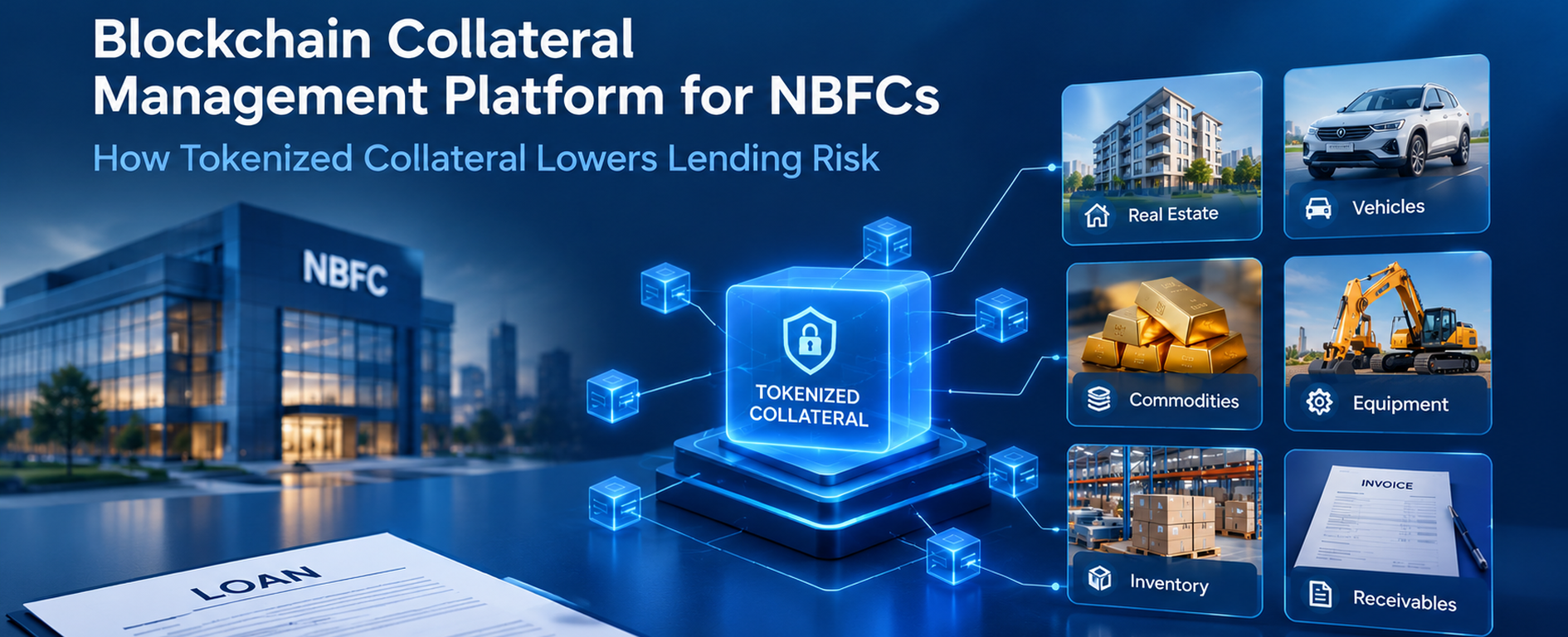
Where legally permissible and operationally feasible, the main categories are:
Eligibility depends on applicable law, transfer restrictions, enforceability, custody, valuation practice and the lender's own policy. Start with the asset class where title and registration are most standardized, and with the lender's legal team involved from the outset.
An enterprise deployment typically combines:
Hyperledger Fabric is one option when institutional participants need controlled membership, granular permissions and restricted data visibility. Per its documentation, every participant has an identity issued through a Membership Service Provider, channels create private sub-networks between members, and private data collections let a subset of organizations on a channel share data that others cannot see. These features suit multi-lender settings where competitors must share status without exposing everything. They are also not the only valid design: some use cases may be better served by other permissioned platforms, or by a shared registry with simpler infrastructure. Choose the architecture from the participants and data-sharing needs, not the other way round.
Use this checklist when shortlisting vendors.
Implementation effort, internal resources, support model, ongoing run cost
What to verify in a pilot before production: that records match source documents, that unauthorized users cannot see or change restricted data, that failed transactions and system outages recover cleanly, that reconciliation with your loan system balances, that audit evidence satisfies your internal audit team, and that results beat a documented baseline for a specific, measurable problem.
Explore how enterprise blockchain infrastructure can support your collateral management workflows.
SIDBI's own messaging pointed to a similar logic: begin with a modest pilot, build basic infrastructure, and use it to build institutional and regulatory interest before expanding.
Three points should shape any NBFC project.
Regulation is still developing. RBI has run a pilot to tokenize certificates of deposit and settle them on wholesale CBDC (announced October 2025), but that concerns money-market instruments, not collateral for NBFC lending. As of March 2026, Cyril Amarchand Mangaldas identified an IFSCA consultation paper as the only Indian policy document on real-world asset tokenization, alongside the pending Private Member's Bill. Nothing here should be read as RBI approval of tokenized collateral; check current RBI, SEBI and IFSCA material directly.
A blockchain entry does not replace statutory registration or perfection. Security interests are created and enforced under asset-specific law and registration processes. For many secured loans this includes registration with CERSAI, the central registry under the SARFAESI Act. That registration is in addition to registrations required under other laws, so a blockchain record cannot stand in for it. Confirm current filing requirements with counsel.
Standard obligations still apply. KYC/AML controls, data protection requirements, audit obligations and RBI's expectations of NBFCs on outsourcing, technology risk and governance apply to a blockchain deployment as they do to any system. Distinguish binding requirements (law, RBI directions) from industry practice (reference architectures, vendor guidance) in internal policy.
NBFC collateral workflows involve several organizations that cannot share one database but need a consistent view. Enterprise blockchain infrastructure supports this through permissioned workflows, shared records, configurable business logic, integration with existing systems and auditability.
Spydra is an enterprise blockchain and asset tokenization platform. Its documentation describes creating private blockchain networks with multiple participant organizations, built on Hyperledger Fabric, and its materials describe integration with enterprise systems such as ERP and CRM platforms. It also offers a public-chain product for tokenization. For NBFCs, the relevant question is whether those capabilities fit a specific collateral workflow, which is best answered through a scoped pilot.
Tokenized collateral is a digital token or blockchain record representing an asset, an ownership interest or a legally defined collateral claim used to secure a loan. It helps track identity, pledge status and lifecycle events. The legal rights it carries depend on how the asset is structured, applicable law and the supporting agreements.
Blockchain gives authorized participants a shared, tamper-evident record of collateral identity, pledges and releases. This improves visibility, supports duplicate-pledge checks, links valuations to LTV monitoring and produces audit trails. It complements underwriting and legal due diligence, and it does not prevent fraud or default by itself.
It can reduce the risk when relevant lenders and registries share collateral status on the same network and new pledges are checked against existing records. It cannot stop pledging to lenders outside the network, forged documents or assets that never existed. Verification at onboarding remains essential.
It depends on the asset, the legal structure and compliance with registration and documentation requirements. India has no general statute confirming that a token creates a security interest, and the Asset Tokenisation (Regulation) Bill, 2026 is a pending Private Member's Bill. Obtain legal advice for each asset class.
Candidates include real estate interests, equipment, inventory and warehouse receipts, eligible securities and receivables, where law and transfer restrictions allow. Feasibility depends on enforceability, custody, valuation practice and lender policy. Begin with one asset class where title and registration processes are well standardized.
Each collateral item gets a unique digital record linked to documents and claims. Authorized parties record pledges, liens, transfers and releases as events on a permissioned ledger. Integrations bring in valuations and registry checks, alerts flag threshold breaches, and every action is logged for audit.
Start with one risk and one asset class, map legal ownership and data dependencies, design integrations and permissions, then run a pilot covering recording, verification and lifecycle tracking. Test failure scenarios and audit evidence, and compare results to a documented baseline before scaling.